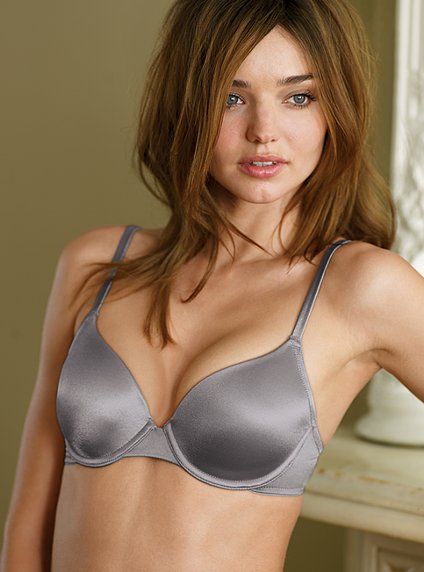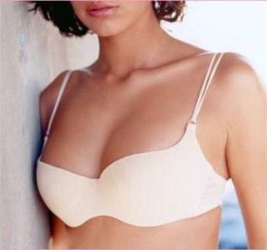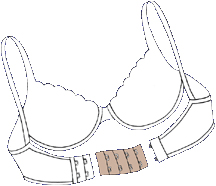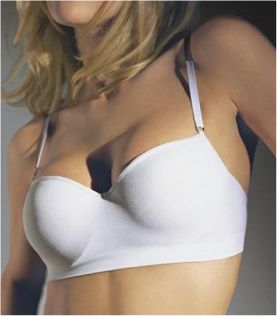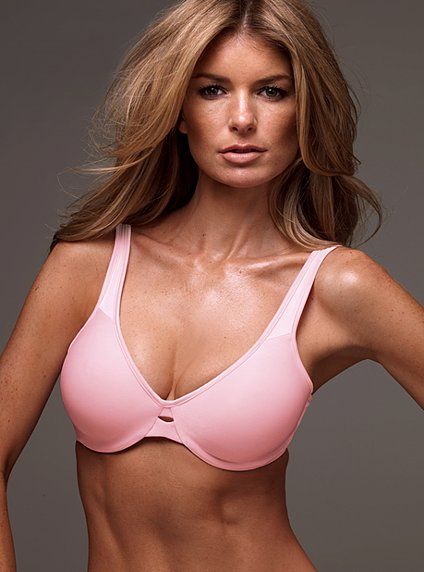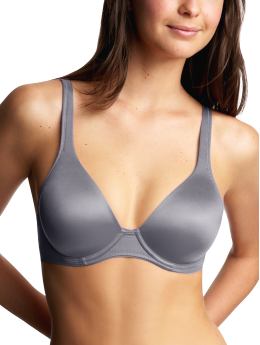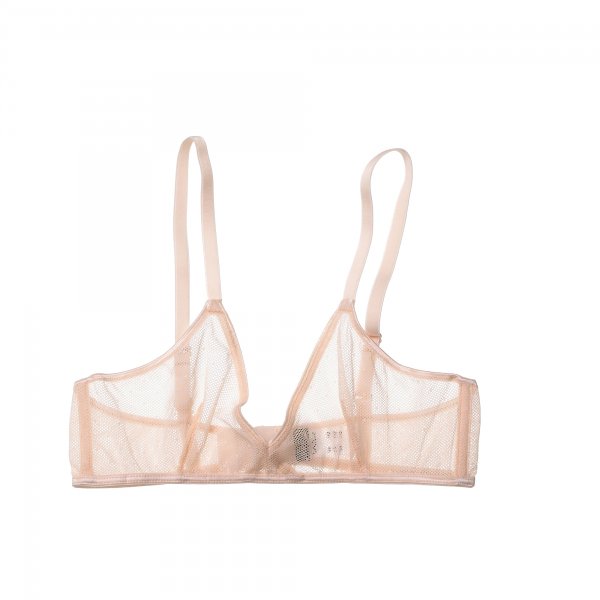
These two bras solve the same underlying problem from opposite directions: what to do when the shoulders and back are exposed. One relocates the straps, the other removes them entirely.
Racer-back bras
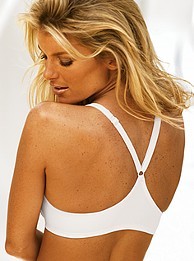
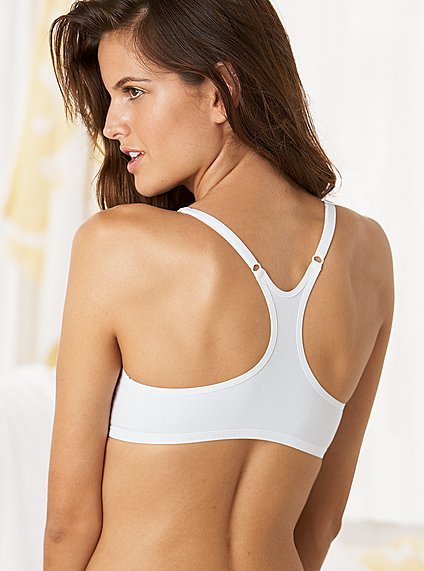
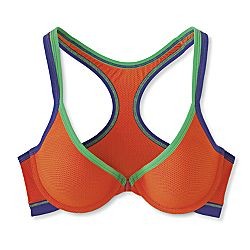
Racer-back bras, also known as T-back or sport-back bras, are designed to give maximum freedom of movement to the back and arms.
Construction
- A T-strap down the center back, with a high curve near the neckline.
- Straps attached close together, frequently onto a center back panel rather than at the sides.
- Cut-outs around the shoulder blades in some designs, which is what produces the freedom of movement.
- A front closure, used by most racer-backs because the back design leaves no room for a conventional fastening.
When to wear one
Under a racer-back top or a sleeveless dress, where standard straps would sit outside the garment and be visible.
The comfort warning
This is worth knowing before buying. Because the straps sit close together near the neck, some women find the style genuinely uncomfortable. Pressure on the cervical nerves in that area can cause headaches, muscle and shoulder pain, and numbness.
If you experience any of that, the style is not for you regardless of how well it solves the neckline problem. A convertible bra set to a racer-back configuration usually places the straps slightly wider and is worth trying instead.
Strapless bras
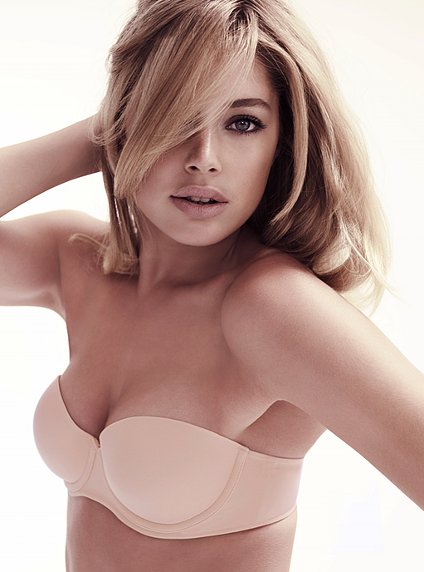
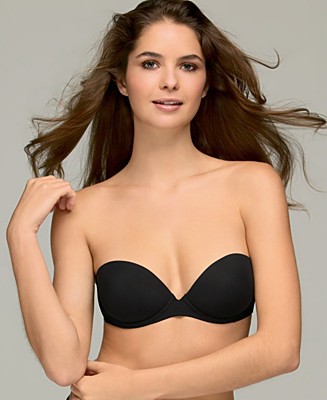
A strapless bra has no shoulder straps, or clear straps that are almost invisible. Everything that would normally be done by the straps has to be done another way, and the engineering involved is more considerable than the simple appearance suggests.
How they stay up
- Wide sides and a wide band, which spread the grip over a large area of the ribcage.
- Longer, more curved underwires that encircle the breast completely rather than sitting only beneath it. This full encirclement is what prevents slippage.
- Boning worked into the front, the center and the underarm region, and sometimes into the cups themselves. This is what gives better support to a heavier bust.
- Silicone grip. Sewn-in silicone stitching, small rubber loops on the inside, and silicone strips all provide friction against the skin.
The fabric, the band design and the shape of the underwires together determine whether a strapless bra works at all. These are not incidental details.
The trade-off
Strapless bras place the entire weight of the breasts onto the chest band, which puts extra strain on the ribcage and the back. There is no way around this: the weight has to go somewhere, and with no straps the band takes all of it.
The payoff is support and cleavage with no visible straps, which is exactly what strapless dresses, off-shoulder dresses and halter or strappy tops require.
Buying one
Support is the deciding factor, ahead of everything else. Check that the bra holds you in completely, lifts, stays in place through movement, and does not leave indentations in the skin. A strapless bra that fails any of those will fail all evening.
Many strapless bras are also convertible, with hooks at various points allowing detachable and reattachable straps for flexibility.
Strapless or bandeau
The distinction is simple: a strapless bra without underwires is a bandeau. Adding the wire is what turns a band of fabric into a structured supporting garment, and it is the reason a strapless bra can hold a heavier bust where a bandeau cannot.
Frequently asked questions
Why do racer-back bras hurt my neck?
The straps sit close together near the neck and can press on the cervical nerves, causing headaches, shoulder pain or numbness. A wider strap placement solves it.
Why does my strapless bra slide down?
Usually the band is too loose. Since the band carries all the weight, a strapless bra needs a firmer band than you would otherwise wear.
What is the difference between a strapless bra and a bandeau?
Underwires. A strapless bra has them; a bandeau does not.
Do strapless bras work for a larger bust?
They can, with boning, a wide band and full-encircling wires. A long-line strapless generally works better, as covered in long-line bras.
See also backless, bandeau and bralette.