The bra is a relatively recent garment. For most of the period in which women wore structured underwear, the structure was a corset, and the shift from one to the other took the better part of a century.
The corset era
From the sixteenth century to the early nineteenth, the standard garment was the corset, and it was genuinely punishing. Corsets were laced tight enough to compress the internal organs and dig into the skin, and the discomfort was not incidental. It was the direct consequence of a garment designed to force the torso into a shape it does not naturally hold.
Splitting the garment in two
The decisive change came in the later nineteenth century, when designers began offering alternatives that split the corset into two or more separate parts.
The lower torso was handled by a girdle-like restraining garment. The upper torso was handled by a separate garment that suspended the breasts from the shoulders. That second piece is the direct ancestor of the modern bra, and the idea behind it, supporting from above rather than compressing from below, is the principle bras still work on.
The modern bra arrives
By the early twentieth century, garments recognizable as modern bras had been introduced, and they gained real popularity through the 1930s. From that point the bra replaced the corset as the standard garment for supporting and controlling the breasts.
The change was as much practical as aesthetic. A garment that supports from the shoulders and the ribcage can be made light, and it does not have to immobilize the wearer to work.
From function to fashion
Over the following decades the emphasis shifted steadily from pure functionality toward appearance. Designers and manufacturers moved from making bras that worked to making bras that were comfortable, attractive and increasingly visible.
Underwear has become progressively more like outerwear, a trend that has continued rather than reversed. Modern technology and design have made bras more comfortable and more functional at the same time as making them dressier, and the garment is now built to complement the shape of the wearer rather than simply to contain it. Bra manufacture and sale is a multi-billion-dollar industry.
The shape changes
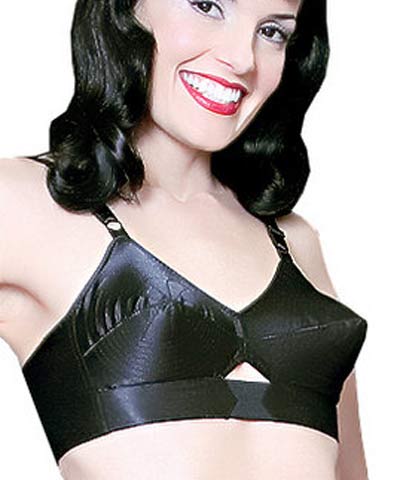
The most visible change is in the silhouette. Mid-century bras were frequently pointed or conical, the shape that gave the bullet bra its name. Modern construction has abandoned that entirely in favor of designs that follow the natural form of the body.
The conical shape has not vanished from culture, though. The corset designed by Jean Paul Gaultier for Madonna took the pointed silhouette to an extreme and made it one of the most recognizable garments of its decade. In the 1980s, Wonderbra’s push-up designs and the campaigns around them created a considerable stir and made the push-up one of the most sought-after styles of the period.
Present-day bras
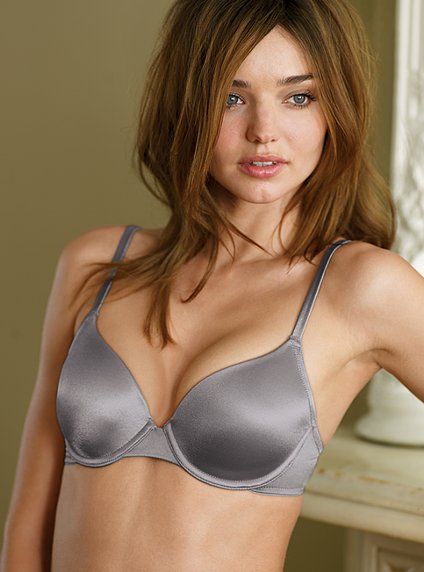
The bra has become a high fashion item in its own right, and the technical range has expanded to match.
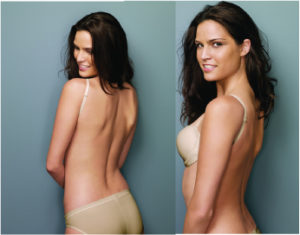
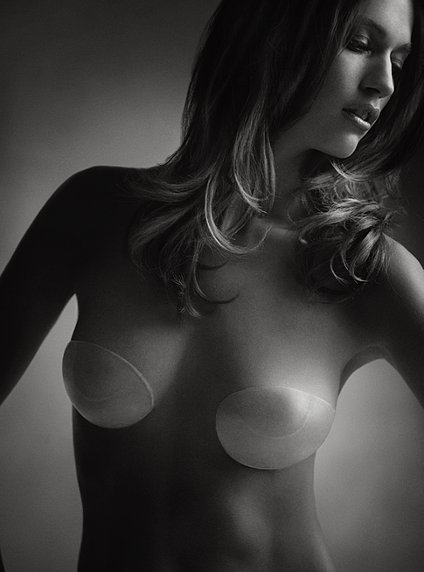
- Invisible construction. Strapless, backless and hookless designs solve the problem of wearing a bra under garments that leave nowhere to hide one.
- Shapewear. The push-up is the most common form, designed to enhance shape and create a fuller line.
- Underwires and padding are now used selectively to meet specific needs rather than applied to every design.
- Multi-way bras that convert between halter and racer-back configurations are in high demand, because one garment covers several necklines.
- Seamless bras are the usual choice under close-fitting T-shirts, since there is no edge to show through.
- Conservative, structured designs remain widely worn, and are frequently the most comfortable option for a full day at home or at work.
- Strapless bras exist because off-shoulder dresses do, and the demand for them has never fallen away.
The through-line in all of it is that the modern bra is designed close to the natural form. The garment adapts to the body rather than the reverse, which is precisely the opposite of the principle the corset worked on.
Frequently asked questions
When did bras replace corsets?
The transition ran through the late nineteenth and early twentieth centuries. Modern bra-like garments gained widespread popularity in the 1930s.
What replaced the corset for the lower body?
A girdle-like restraining garment, introduced as part of the same split that produced the bra for the upper torso.
Why were older bras pointed?
The conical or bullet shape was the fashionable silhouette of the mid-twentieth century. Modern construction follows the natural shape of the body instead.
What is the biggest change in modern bras?
Invisibility. Strapless, backless, hookless and seamless construction let a bra work under garments that would once have made wearing one impossible.
For what the garment does mechanically, see bra functionality and the basic elements of a bra.