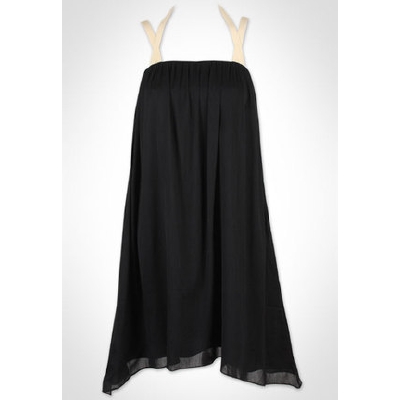
Silhouette is the overall cut and shape of a dress: the foundation everything else sits on. It decides how a garment drapes on the body and sets the mood of the whole thing before any detail is added. An A-line and a full-skirted ball gown make entirely different arguments, and neither is a matter of decoration.
Silhouettes are built from three components combined: the waistline, the bodice and neckline, and the skirt. Ruffles, strings, pleats, ruching and sheer volume of fabric are the tools used to change how each one reads. This guide covers ten dress silhouettes, what each one does to a body, and which figures each suits.

A-line dresses
Christian Dior introduced the A-line for his Spring-Summer 1955 collection. It is narrow at the top and flares toward the hem, fitted through the bodice and wide at the bottom, which is where the resemblance to the letter A comes from.
The skirt lines are straight, clean and ungathered. Most A-line dresses use an empire waistline. The bodice can be halter, strapless or long-sleeved without changing the silhouette.
Variations. A slim A-line is subtle; a wide one is dramatic. A princess cut runs vertical seams from chest to hem. A circle skirt is the widest version of all. Some A-lines use a narrow waistband, some pleats, some neither, and some skim the hips before widening with seaming at the waist.
Where to wear it. Formal events, weddings and evening parties, and casual outings equally.
Fabrics. Almost anything, with the weight deciding the occasion. Heavier fabrics hold their shape and suit formal wear; lightweight cotton, silk and synthetics drape freely and suit evening parties.

Pear shape
A pear shape has broader hips, narrower shoulders and a shorter torso. The A-line balances that by drawing attention upward and skimming past the lower half.
Wear. A drop shoulder cut, which broadens the shoulder line. Dark, solid colors below the waist. A waist belt to define the narrowest point, and a narrow one rather than a thick one.
Avoid. Pencil skirts, which follow the curve rather than skimming it. Thick belts, which cut the body in half.
Accessories. Long necklaces, opera and rope lengths, with bold pendants, plus large earrings, all of which pull the eye up. Scale matters here: small delicate pieces make the frame look larger by contrast, so choose substantial jewellery and larger bags.


Petite
The A-line is one of the most flattering silhouettes on a petite frame, because it elongates the torso.
Wear. A hem no more than an inch or two below the knee, with a wide flare if you want it. A broad V-neckline, which adds vertical length. Spaghetti straps or a shoulderless cut. Front wraps, which add apparent height. Small prints and vertical stripes.
Avoid. Ankle-length A-lines, which break the vertical line and shorten the frame. Bold large prints, which overwhelm it.
Note on the bodice. A fitted bodice draws attention to the bust, so padding is worth considering if you want more balance there.
Accessories. Long necklaces in opera or rope lengths and long slender earrings, both adding vertical line. Keep the jewellery delicate rather than chunky, carry small bags, and wear heels.
For work, pair an A-line with a cami or a jacket.


Apple shape
An apple shape carries a fuller bust, narrower hips and broader shoulders.
Wear. A V-neckline or halter with an A-line skirt. A hem an inch or two above the knee, or just above the ankle for the dressier versions; mini, knee-length and long all work in this cut. Solid dark colors, black, brown and navy, and monochrome dressing in dark shades. Large-scale prints and strong vertical detailing, pinstripes, zips, vertical paisley, cable patterns and pleats. Heavier fabrics, which skim rather than cling; cotton and spandex both work, and knits suit winter.
Avoid. Off-shoulder evening A-lines, which broaden the shoulders further. Anything baggy or tight, since both add apparent size. Small prints, which do the same. High-contrast color combinations.
The fabric test. If a dress clings to your curves, the fabric is wrong for the shape, regardless of the cut.

Sheath dresses
A sheath is slim and form-fitting, following the body’s curves closely through a fitted bodice and a fitted skirt. It brings most figures closer to an hourglass line, which is why it is so widely flattering.
Construction usually adds bust darts and curves slightly inward at the waist, though some use an empire line or an A-line skirt instead. Length runs from mid-calf to the floor. Some have side slits for movement.
Sheaths are usually beltless, though a belt sharpens the waist further. They come sleeved or shoulderless, and bateau, V, scoop, sweetheart and jewel necklines all suit the cut. Historically the sheath began as an undergarment or under-dress, often in silk, worn beneath an over-dress.
Where to wear it. Almost anywhere: office, weddings, cocktail parties, beaches and casual outings. It is the most popular silhouette for beach and destination weddings, usually with short sleeves or none. For work, a hem between just above the knee and mid-calf, in black or grey, covers any business setting.
Fabrics. Silky and lustrous for parties and weddings. Heavy fabrics for wedding wear, and especially for plus sizes, because heavier cloth is less form-fitting. Knits for winter. Menswear fabrics and leather are both current.
Pair it with jeans, tights, trousers, leggings, colored stockings, a long cardigan or a slim structured blazer, pulled together with a wide belt.

Petite
Wear. Clean straight lines, which read as length. Empire or A-line versions. Off-shoulder cuts with a sweetheart neckline, which show the collarbones and arms. Bateau and keyhole necklines, which do the same for the shoulder line. One-shoulder sheaths, with or without ruffles. Vertical patterns and lighter shades: peach, cream, brown. A belt to define the waist.
Avoid. Fuller skirts, which throw the proportions off. Broad belts.
If you are petite and pear-shaped, the sheath is unforgiving of a heavy top or bottom. Adding volume at the top, through ruffles, frills, lace, beads or bows, restores the balance.
Accessories. A long statement necklace, rope length, for vertical line. A clutch. Kitten or high heels. A brooch pinned above the bust pulls attention upward and away from a heavier bottom half.


Plus size
Sheaths are slimming, and they work best on an hourglass figure where the upper and lower halves are already balanced.
Wear. Ungathered, knee-length straight lines. Dark colors and bold prints. Detailing placed over the parts of the body you want noticed, and plain fabric over the rest.
Avoid. Off-shoulder, halterneck and sweetheart necklines. Heavy pleats and frills at the skirt, which add weight at the hip.
Accessories. Knee-length or calf-high boots, pumps, wedges and heels. A narrow belt to mark the waist. A structured clutch. For jewellery, brooches set with precious stones for weddings and parties, metallic or colored ones for casual and work, diamonds or a solitaire for real impact, and a long string of pearls for vertical length. Diamond-set or vintage bracelets dress it up; a simple one works at the office, as does a bracelet-style watch.


Tent dresses
The tent dress was popularised in the 1960s and is credited to Hannah Troy. It is narrow at the neckline and wide at the hem, hanging loose from the shoulder with no marked waistline and usually no belt.
Most are cut on an A-line. Sleeves range from none to full, and closures are usually a slip-on or a zip, which makes it one of the easiest dresses to wear. Length runs from mini to below the knee, and some are short enough to read as a shirt.
Where to wear it. Casual outings, and work or a business meeting with the right suit jacket or a belted blazer.
Fabrics. Any fabric, pattern or color.
Pair it with skinny jeans, leggings, a jacket or a sweater on a cold evening. Under a shoulderless tent dress, a skinny halter or spaghetti top.

Petite
Wear. Your actual size. A hem at the knee or an inch either side of it, or a mini. Lighter colors and thicker fabrics, both of which add breadth. Buckles, pleats, ruffles or frills at the neckline, which add volume to a narrow frame. A narrow belt if the dress takes one. Vertical stripes and small scattered prints. A short dress with a wide hem, which disguises narrow hips.
Avoid. Anything to mid-calf or below, which flattens the whole look. Dark colors, very large prints and horizontal patterns.
Accessories. Narrow belts, delicate jewellery, long necklaces, clutches or small bags, and kitten or high heels.


Plus size
The tent dress flatters a fuller figure, with one caveat: too much tent, or a bulky cut, works against it.
Wear. A dress with real structure, in your actual size. A hem an inch or two either side of the knee, or at the calf if you would rather cover it. Dark colors, vertical lines and patterns, and large designs and motifs. A narrow belt, or waist detailing, to bring the shape toward an hourglass.
Avoid. Fabrics that cling. Baggy cuts, which add apparent weight rather than hiding it. Very short or very wide versions. Ruffles, trims, pleating and heavy embellishment at the neckline if you have a full bust. Small busy prints.
The size mistake. Buying a size up does not make you look slimmer. It makes the dress look wrong.
Accessories. Couture or vintage jewellery, long beaded necklaces or large pendants for height, and large beaded bracelets. Large handbags. Heels, slingbacks, strappy sandals or ballet flats. Not wide belts.


Wrap dresses
Diane von Fürstenberg designed the wrap dress in 1973. The bodice fits closely and the skirt flows, and the extra fabric that creates the wrap almost always produces a V-neckline.
The front may open completely, or use inside and outside button closures, or removable ties on the principle of a coat or robe. That tie is the point: you set the tightness yourself, which makes it the most forgiving and adjustable dress in this guide. It also needs little care and little ironing.
Where to wear it. Work, parties, beaches, travel and casual outings, at any age. It is a particularly good answer for curvy figures.
Fabrics. Cotton, knits and silk jersey all wrap well.
Pair it with tank tops, camisoles, cropped blazers, cardigans, leggings, tights and jeans.

Hourglass
The crossover suits an hourglass figure precisely: it marks the waist, lifts and defines the bust and narrows the hip line.
Wear. A-line wraps, or ones with a slight flare. The V-neckline, which elongates.
Avoid. Sweetheart necklines with a fuller bust, which enlarge it further, and ruffles or frills at the top for the same reason.
Accessories. A well-fitted belt at the waist, and a thin one rather than a thick one, which cuts the body in two and shortens it. Footwear is open: flip flops, boots, heels, flats, pumps or sandals, depending entirely on the occasion.

Petite
Wear. A crossover fitted bodice with an adjustable tie. Wrap detailing at the top, which lengthens a short frame, and a V-neckline for the same reason. Ruffles or large collars at the neckline, which add volume above. Waist-cinching styles, which create curve. Sleeveless cuts if you want to show the arms. Vertical prints and patterns; plaids also work.
Avoid. Bulky skirts with a large volume of fabric, which make a small frame look smaller. Horizontal patterns of any kind.
One caution. The wrap highlights the bust. On a petite frame with a small bust and little curve, the wrong wrap emphasizes flatness rather than shape, so this is one to try on rather than order.
Accessories. Jackets, coats and cardigans. Strappy sandals, knee-high boots or heels. A fine long necklace for height.


Pregnancy
A wrap dress works through an entire pregnancy, because expanding it is a matter of wrapping and tying it differently rather than buying a new size.
Wear. Light, comfortable stretch materials; stretch jersey flatters the shape particularly well. A tie that can be set to sit just below the bust once the waist has gone. Tie-backs. Side ruching or shirring. Dark colors for a slimming line. A bump-hugging wrap top with jeans or leggings is the separates version of the same idea.
Avoid. Shimmering fabrics and bold prints, unless drawing attention to the bump is the intention.
Accessories. Ballet flats, boots or kitten heels. Clutch bags. Statement necklaces, large danglers, a brooch or pin, all of which hold attention high.


Ball gowns
A ball gown has a fitted bodice and a dropped waistline giving way to a full, loosely draping skirt. The fullness usually comes from a wired underskirt, the crinoline, and can be increased with pleats, gathers, ruffles, petticoats or hoop skirts. Length runs to the ankle or beyond.
Most have a low neckline exposing the décolletage, cut wide to expose the shoulders, or shoulderless entirely. Spaghetti straps are also common. Tea-length versions are the equivalent for young girls.
Where to wear it. The dressiest garment in this guide, made for the most formal occasions and worn to a white tie or evening dress code.
Fabrics. Satin, silk, taffeta and velvet, with trimmings of pearls, lace, sequins and ruffles.

Petite
Ball gowns flatter almost every body type, much as the A-line does, though they suit petite women of average height or above best.
Wear. A-line or empire-line gowns with moderate fullness. Extra flares and pleats at the waist, which widen narrow hips and add curve. Neckline detail such as bows, buckles, frills, ruffles, pleats and embellishment, all of which add volume above. Spaghetti straps or puffed sleeves to cover lean shoulders. Lower necklines, sweetheart, deep square, deep V or scoop, which add length and expose décolletage. A sweetheart neckline in particular builds curve at the bust. If a pear shape with wider hips and leaner shoulders, an off-shoulder neckline; a halterneck disguises a narrow chest, shoulders and arms. A plunge bra where the shape needs help.
Avoid. Excess fabric, which a petite frame simply disappears into, and a skirt that cuts the body in half.
Accessories. High-heeled or kitten-heeled sandals with embellishment to match the gown; slingbacks or ballet flats if you are already tall. Precious stones placed to draw attention where you want it, a chunky solitaire for real impact, or vintage couture pieces. A choker or princess-length necklace gives a classic line and draws attention away from a small bust; an opera length adds vertical height. A matinee length draws attention to the bust, so skip it if that is not the aim. A rich clutch, and long earrings for length.


Plus size
Wear. An A-line or empire-line ball gown for a slimmer line. A halterneck or shoulderless neckline. A stole or cashmere shawl over an off-shoulder gown if you would rather cover the arms.
Avoid. Excessively heavy skirts, which build volume at the bottom. Spaghetti straps, halternecks and sweetheart necklines where they emphasize broad shoulders, a wide chest or fuller arms. A sweetheart neckline with a large bust, which rounds it further. Frills, ruffles, bows, detailing and pleating at the neckline, which draw the eye to the bust.
Accessories. Match jewellery to the sequins of the gown; naturally colored diamonds are current, and a large colored solitaire carries a whole outfit. Vintage couture jewellery, a stole or cashmere shawl, opera-length gloves, butterfly or floral pins, hair jewellery, ruffles and bows. Skip matinee-length necklaces, which sit at the bust. Clutches and sandals with studs, beads or chains.


Tube dresses
A tube dress is an elongated tube top, running from the armpits down over the lower body. The bodice is shoulderless, sleeveless and strapless, wrapping around the chest and leaving the shoulders bare. The skirt below can be empire, A-line or basque.
The bodice is often a simple band of stretch material with little structure, taking the shape of the torso. Better ones have a band of elastic or a hidden strip of rubbery plastic at the underarm seam to stop it slipping, and some add buttons, bows, ties or built-in bust support. Length runs from the midriff downward.
Worth knowing: a tube top is a strapless top, but not every strapless top is a tube top.
Variations. Smocked, tulip and babydoll versions are fitted at the bust and flow away from the body below, and are usually cut in less stretchy fabric. Draped versions have a bust band at the underarm seam and drape away from the body before sitting close at the hips. Tube top jumpers connect to trousers.
Where to wear it. Casual events, meeting friends and evening parties.
Fabrics. Stretch materials: spandex blends, jersey and knits.
Pair it with slim jeans and capris.

Petite
Wear. A hem an inch or two either side of the knee, or a mini if you want to show the legs. Detail such as frills and bows at the top, which balances the lower half, a real help on a pear shape. Ruching at the waist to mark it. Ruffles running the full vertical length, which add height. Prom-style versions. Pleated skirts, for a retro line. One-shoulder styles, which show the collarbones, arms and neck. Small prints, vertical straps and fresh colors. A bow or flower at the underarm seam to draw the eye upward. Padded cups where the bust needs help.
Avoid. Large volumes in tulip or draped styles, which overwhelm the frame. Horizontal details, designs and prints.
Accessories. A belt to define the waist. Rope or opera-length necklaces for vertical length. Trendy handbags with animal prints for a bolder look, or a clutch for parties. Tribal or delicate floral pieces.


Plus size
Wear. Gentle pleats, an A-line bodice, controlled flares and straight lines. Your actual size, fitted snugly at the top so everything stays where it should. A hem an inch or two either side of the knee. Draped tube dresses, which skim the stomach, cut below the midriff. Basque or empire lines, which play down a heavy bottom or tummy. Two-tone dresses, one lighter shade and one darker. Thick or banded straps if you want straps. Warm dark colors, vertical lines and patterns.
Avoid. Hems that fall between the calves, and mini lengths. Halter styles, which emphasize the arms, shoulders and waist. Thin straps. Flashy shiny fabrics and very stretchy materials, both of which cling.
Accessories. Scarves, an evening shawl, a light sweater, a cropped jacket or a denim jacket, all of which cover the arms. Strappy heels, sandals, ballet flats, loafers, slingbacks or feature heels. A large handbag for casual wear, a clutch for parties. Chunky jewellery, and vintage couture for a retro effect. A belt to define the waist.


Shirt dresses
A shirt dress is cut on the lines of a man’s shirt and lengthened. Most have a looser fit with the waist defined by a belt, and button closures running the full length of the front. Ruffles are sometimes set parallel to that button line to dress it up.
Collars and classic cuffs are standard, sleeves can be long or short with short more common, and pockets appear in most designs. Length varies from mid-thigh downward, but a shirt dress should never be longer than knee-length.
Variations. Safari styling, and nautical patterns, buttons and colors.
Where to wear it. Casual outings.
Fabrics. Lightweight cotton and silk mostly. Cotton for casual wear, heavier materials for work.
Pair it with lace-trimmed camisoles or tank tops underneath, and blazers, cardigans, jackets, skinny jeans, slim trousers, slacks, leggings or capris.

Petite
Wear. A little flare or pleating to add volume below, or an A-line for height. Jersey, full-skirted belted or gathered versions. Any length from mini to an inch either side of the knee. A size that skims rather than clings or hangs. A belted front to mark the waist. Ruffle fronts, which add height. Coat-style collars for vertical length, and ruched or large collars to draw attention from a smaller bust. Sleeveless to show the arms, or long sleeves, which also show their shape. Denim, khaki, cotton, linen and silk. Black, grey, white, navy and olive, all of which combine with everything else. Small scattered prints or vertical lines.
Avoid. Baggy cuts and anything reaching mid-calf.
Accessories. A narrow belt; a thick patent leather one goes with almost any shirt dress. A scarf tied at the neck to accent the collar line, or a scarf headband. Tights with ankle or below-knee boots. Ballet flats, low pumps, strappy heels or open-toe sandals. Bare legs, or sheer or shimmery stockings. A large tote or slouchy bag for daytime, a clutch for evening. A long strand of colored beads, an opera or rope necklace worn with the buttoned front, and pearls, gold or silver.
One rule. A shirt dress is a light garment and should never be worn with heavy shoes: no boots with weight to them, no chunky platforms.


Plus size
The shirt dress is one of the most flattering silhouettes here, and a belted one brings the shape close to an hourglass.
Wear. Straight lines and cuts with little or no flare at the hem; an A-line adds height. A size that keeps the loose silhouette, which plays down heavy hips, thighs and chest. A hem no more than an inch or two below the knee, and no shorter than an inch above it. Vertical patterns for height, horizontal ones for width. A buttoned-up front, which lengthens and slims. Checks, safari and nautical prints. A few buttons open at the top, which adds length through the neck and chest. Warm colors and side ruching. Wrap-style shirt dresses with belts.
Avoid. Unbelted shirt dresses, which add weight and read as shapeless. Large bulky pockets or chest detailing, which add volume at the bust. Large collars, which make the neck and shoulders look heavier. Stretch fabrics and small prints.
Accessories. A belt, but not a wide one, which shortens by cutting the body in two. Fetish sandals, boots, pumps or ballet flats, but no heavy boots. The simpler the dress, the more intricate the shoe can be. A chunky watch. Large handbags, and reptile prints for a bold finish. Long dangling earrings for height. Skip opera necklaces, which sit at the bust.


Sundresses
A sundress is an informal dress of any shape, defined by its purpose rather than its cut: modest enough to cover, open enough to let the sun reach you. Very low necklines, short hems, side slits, loose sleeves and thin shoulder straps are all typical, and it is worn without a top layer.
Colors and prints. Black, green, plum, lime and teal. Floral, zigzag, abstract, animal and geometric prints.
Where to wear it. Casual outings, beaches and holidays.
Fabrics. Lightweight fabrics and cotton, with silk for the dressier versions.

Petite
Wear. Any length that suits you; a mini shows the most leg and adds the most height. An empire waistline for curve. Any volume at all, pleats, flares or a straight A-line. Any sleeve, puffed, long and full, sleeveless or strapped. Ruffles or frills for volume at the top, which balances a pear shape. A halter neck to show the arms and shoulders, or a deep V for height.
Avoid. Large prints.
Accessories. Narrow belts rather than thick ones. Bangles, or a long opera necklace for height. A flower in the hair finishes the beach version.


Plus size
Wear. A size that fits properly. Ankle-length sundresses, which draw attention away from the lower half, or a hem an inch above the knee if you want to show your legs, which also adds height. Volume, but in lightweight fabric. Solid, bold, dark, absorbing colors. For a pear shape, a long dress with a flowing skirt over the thighs, and A-lines with clean straight cuts over the hips. An open collar or V-neckline, which lengthens the neck and chest. Straps thick enough to support a fuller bust. A shrug or stole to cover the arms; silk works. A belt to define the waist. A keyhole neckline for a striking finish.
Avoid. Baggy cuts, which add apparent weight rather than hiding it. Deep V-necks, halternecks and deep keyholes. Thin straps. Embellishment placed anywhere you would rather not draw the eye.
Accessories. Keep them minimal, and skip them entirely if you can. Scale jewellery to your frame. Belts with little or no embellishment. With a bold print, the accessories should stand back.


Maxi dresses
A maxi is form-fitting at the bodice and loosely draping below, running to the ankle or the floor.
Where to wear it. Versatile enough for anywhere: dinner parties, beaches and long journeys.
Fabrics. Cotton or polyester, chosen for a loose free-flowing drape.

Petite
A maxi adds height, but only if the fit is right.
Wear. A dress that genuinely fits; a badly fitted maxi on a small frame reads as a column. A structured dress, which marks the waist and creates shape. A full-length dress that sits close to the body. Thin straps and a defined waistline, empire or A-line. Solid colors, particularly black, olive, purple and dark brown. Small prints. Large flares and pleats only on an empire line. A V or scoop neckline, which opens the shoulders and neck. Pumps, wedges or high-heeled sandals for extra height.
Avoid. A long hem without heels, which shortens you. Horizontal and large patterns. Large volumes of fabric and hanging ruffles, which throw the proportions. Belts, which break the vertical line and cut the body in two.
Accessories. Small handbags. A headscarf rather than a hairband. Small delicate jewellery. A narrow belt if one is unavoidable.


Plus size
Wear. Form-fitting maxis; a loose one reads as boxy. A-line maxis, which are a particularly good choice for wedding gowns because they do not cling. A halter style or thick straps with a fuller bust. Large block prints. A V-neckline for a leaner vertical line, and an empire waistline to skim the stomach. Neutral colors, olive, black and brown. A basic cardigan over the top in cold weather.
Avoid. Hems that are too long. Thin spaghetti straps. Small prints, florals especially. Closed-toe footwear.
Accessories. A belt on a loose maxi, worn just below the bust or at the waist, which turns it into a fitted bodice with a wide skirt. Long necklaces, opera length, for height. Scarves and handbags. Gladiators, sandals, strappy sandals, wedges, espadrilles or heels.


Empire-line dresses
An empire waistline sits above the natural waist, just below the bust, and the skirt falls from there. It can flow freely or be cut closer, and it usually pairs with a square neckline, wide straps or sleeves.
The line is very old: both the Greeks and Romans wore it. In modern dress it was made popular in the 1960s by Grace Kelly and Jacqueline Kennedy.
Why maternity wear uses it. A waistline sitting below the bust is more comfortable during pregnancy, and fabric draping freely over the stomach lets the shape change without the garment fighting it. Maternity versions often add tie-backs so the dress can be let out as it needs to be.
Where to wear it. Summer dresses and gowns both use the empire line, as does much formal wear, with the amount of draping deciding how formal it reads.
Fabrics. Lightweight, for the flowing effect the line depends on.

Petite
The empire line suits a slender or petite figure better than almost anything else. It creates an illusion of length, enhances minimal curves and suggests a fuller body.
It is at its best on someone slender through the top, which is to say a petite pear shape, because it maximizes the bust. For the same reason it is a strong choice for a bride with a smaller bust, since it draws the eye to the neckline.
Wear. A ribbon, detail or frill at the waist to mark it. The line also works as a separate: an empire-waisted top over slim jeans or a skirt, if you would rather show the legs. Sleeve length is open, covering or exposing the arms as you prefer.

Plus size
The empire line elongates, which is what makes it work on a fuller figure. The design creates a smooth straight silhouette that reads as both slimmer and taller.
Because the waistline sits above the midsection, it skims the stomach and thighs entirely rather than following them, and it softens a bottom-heavy figure or a thick waist toward an hourglass line.


Quick reference
| Silhouette | Shape | Best for | Wear it to |
|---|---|---|---|
| A-line | Fitted top, flared hem | Pear, petite, apple; almost everyone | Formal and casual alike |
| Sheath | Slim and form-fitting throughout | Hourglass, and most figures in the right fabric | Office, weddings, cocktails, beaches |
| Tent | Narrow at neck, wide at hem, no waist | Every age and figure, with structure | Casual, and work with a jacket |
| Wrap | Fitted bodice, flowing skirt, adjustable tie | Hourglass, curvy figures, pregnancy | Work, parties, beaches, travel |
| Ball gown | Fitted bodice, dropped waist, full skirt | Almost all figures | White tie and formal evening only |
| Tube | Strapless stretch bodice, any skirt | Petite; plus size in structured cuts | Casual and evening parties |
| Shirt dress | Shirt tailoring, belted waist | Plus size especially, when belted | Casual, and work in heavier fabric |
| Sundress | Informal, open, lightweight | Every figure, with the right straps | Beaches, holidays, casual outings |
| Maxi | Fitted bodice, floor-length drape | Petite with heels; plus size when fitted | Dinner, beaches, travel |
| Empire | Waist just below the bust | Slender and petite; plus size; maternity | Summer dresses through to formal wear |
Frequently asked questions
Which dress silhouette suits the most body types?
The A-line and the ball gown both flatter almost every figure, and the empire line comes close. All three are fitted above and full below, which is the arrangement that works on the widest range of shapes.
What is the difference between an A-line and an empire dress?
Where the waist sits. An A-line is fitted through the bodice and flares from the waist, and most A-lines happen to use an empire waistline. An empire dress is defined by the waist sitting just below the bust, whatever the skirt does below it.
Which dress is best for a pear shape?
An A-line, which draws attention up and skims the hips. Pair it with a darker bottom half, add an off-shoulder or drop shoulder cut to broaden the shoulder line, and add volume at the top with ruffles, detail or a statement necklace. Avoid pencil skirts and thick belts.
What should a petite woman look for in a dress?
An unbroken vertical line. Hems no more than an inch or two below the knee, V and scoop necklines, vertical prints, small-scale patterns, long necklaces and heels. Avoid ankle-length hems without heels, large prints, horizontal patterns, wide belts and large volumes of fabric.
Does buying a size up hide a fuller figure?
No, and it is the most common mistake in this guide. A dress larger than you makes you look larger. Fit and structure are what flatter, and both are lost the moment the garment stops following the body.
What dress works throughout a pregnancy?
The wrap dress. It is expanded by wrapping and tying it differently rather than by buying a new size, so one dress covers the whole term. Choose light stretch fabrics, ideally stretch jersey, and a tie that can be moved to sit just below the bust. The empire line is the other answer, which is why so much maternity wear uses it.
Why does my dress cling in the wrong places?
The fabric, not the cut. If a dress clings to your curves, that fabric will not work for your figure whatever the silhouette. Heavier fabrics skim rather than follow, which is why they are the recommendation for fuller figures in almost every category here.
See also body types, the necklines guide and the waistlines guide.